
How Do Compostable Bags Break Down? A Complete Decomposition Guide
As sustainable packaging becomes a priority for businesses and consumers alike, one common question continues to surface:
How do compostable bags break down?
While compostable packaging is often promoted as an eco-friendly alternative to plastic, the science behind its decomposition is not always clearly understood. Compostable bags are engineered to return to nature safely — but only under the right conditions.
In this guide, we’ll explain exactly how compostable bags break down, what makes them different from conventional plastics, how long decomposition takes, and what actually happens during the composting process.
What Makes a Bag Compostable?
Before understanding how compostable bags break down, it’s important to clarify what qualifies a product as “compostable.”
Definition of Compostable
A compostable bag is a product designed to decompose into natural elements — such as water, carbon dioxide, and biomass — within a defined timeframe under composting conditions, without leaving toxic residue behind.
Unlike generic biodegradable materials, compostable products must meet strict scientific criteria.
Required Certification Standards
For a bag to be labeled compostable, it must pass recognized testing standards such as:
● EN 13432 (Europe)
● ASTM D6400 (United States)
● ISO 17088 (International)
● CPCB Certification (India)
These standards evaluate:
● Rate of biodegradation
● Disintegration during composting
● Absence of heavy metals
● Ecotoxicity impact on soil
Certification ensures that compostable bags break down safely and predictably — not just fragment into smaller plastic particles. The decomposition process must meet standards defined under compostable bag certification in India.
The Role of Compostable Polymers
Compostable bags are made from specially engineered biopolymers designed to be digestible by microorganisms under controlled composting environments.
Unlike petroleum-based plastics, compostable polymers are structured to:
● Absorb moisture
● Break polymer chains under heat
● Allow microbial enzymes to convert them into organic matter
The chemistry of these materials is what enables compostable bags to break down fully rather than persist in the environment.
Materials Used in Compostable Bags
The decomposition process begins with the materials used during manufacturing. Modern compostable packaging relies on renewable and compost-compatible polymers.
Cornstarch-Based Biopolymers
Cornstarch-derived materials serve as the backbone for many compostable bags. These plant-based polymers are sourced from renewable agricultural inputs and are designed to biodegrade under composting conditions.
Because they are derived from natural starches, microorganisms can metabolize them more easily than conventional plastics.
PLA (Polylactic Acid)
PLA is a plant-based polymer made from fermented plant sugars, typically derived from corn or sugarcane.
It provides:
● Structural strength
● Clarity and flexibility
● Compostable integrity
Under high temperatures found in industrial composting facilities, PLA’s molecular chains break down efficiently.
PBAT (Polybutylene Adipate Terephthalate)
PBAT is a flexible compostable polymer that enhances durability and performance.
It contributes:
● Tear resistance
● Flexibility
● Functional strength for commercial applications
PBAT is often blended with PLA and starch to create compostable films that are both strong during use and biodegradable under composting conditions.
Cellulose Fillers
Cellulose, derived from plant fibers, enhances material stability and compost compatibility.
It helps:
● Improve tensile strength
● Support structural integrity
● Facilitate microbial digestion
Material Engineering Strength
At G2G Bags, compostable packaging solutions are manufactured using advanced blends of cornstarch-based biopolymers, PLA, PBAT, and cellulose fillers. These formulations are engineered to maintain durability across industries — including retail, hospitality, healthcare, waste management, and commercial sectors — while ensuring full compliance with certified compostability standards.
Balancing performance with environmental responsibility requires precise polymer engineering, not just plant-based sourcing.
Industrial Composting vs Home Composting
To fully understand how compostable bags break down, it’s essential to examine the conditions required.
Not all environments support composting equally.
Temperature Differences
Industrial composting facilities maintain temperatures between 55°C and 70°C. These elevated temperatures accelerate polymer breakdown and microbial activity.
Home composting systems, by contrast, typically operate at lower and less stable temperatures, slowing decomposition.
Moisture Requirements
Moisture plays a critical role in hydrolysis — the chemical process that initiates polymer chain breakdown.
Industrial facilities maintain optimal humidity levels, whereas home compost bins may fluctuate depending on climate and maintenance.
Oxygen Levels
Aerobic conditions (presence of oxygen) are necessary for effective composting.
Industrial systems regulate oxygen flow to promote microbial digestion. Landfills, however, are often oxygen-limited, which slows or prevents proper decomposition.
Why Industrial Composting Works Faster
The combination of:
● High heat
● Controlled moisture
● Balanced microbial activity
● Proper aeration
creates ideal conditions for compostable bags to break down within predictable timelines.
Without these controlled variables, decomposition can slow significantly.
Step-by-Step Breakdown Process
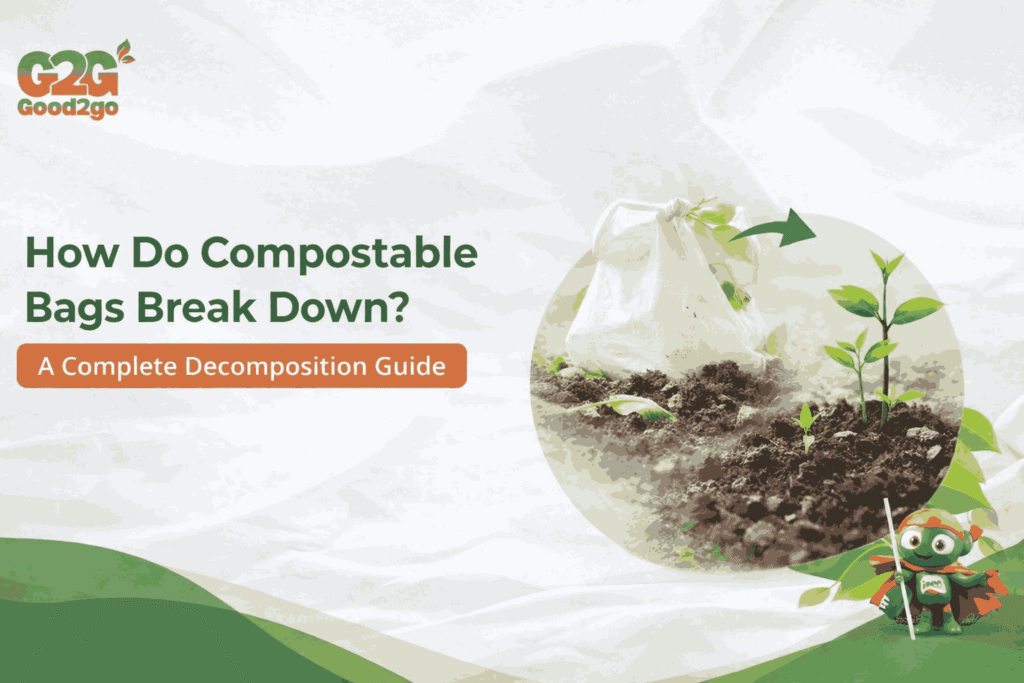
Now let’s look at what actually happens during composting.
Understanding these stages explains exactly how compostable bags break down in real-world conditions.
Stage 1: Heat Activation
When compostable bags enter a high-temperature composting environment, heat begins to weaken the polymer chains.
This phase triggers:
● Softening of the material
● Molecular instability
● Initial surface cracking
Heat acts as the catalyst for decomposition.
Stage 2: Microbial Digestion
Microorganisms such as bacteria and fungi begin consuming the weakened polymer chains.
Enzymes break long-chain molecules into smaller fragments that microbes can metabolize.
This is the true biological conversion phase.
Stage 3: Disintegration
The bag visibly breaks apart into smaller pieces.
However, unlike conventional plastic fragmentation, these fragments are biodegradable organic compounds — not microplastics.
This stage typically occurs within weeks under industrial composting conditions.
Stage 4: Conversion to Biomass
The final phase transforms material into:
● Carbon dioxide
● Water
● Organic biomass
Compostable bags become indistinguishable from other organic compost materials such as food waste or plant matter.
At this point, no toxic residue remains.
How Long Does It Take?
Under certified industrial composting conditions, most compostable bags break down within 90 to 180 days.
Certification standards require that:
● At least 90% of material converts into carbon dioxide within a defined timeframe.
● The product disintegrates without leaving visible fragments.
Why Landfills Slow the Process
Landfills lack:
● Oxygen
● Controlled temperature
● Balanced microbial ecosystems
As a result, compostable bags may not decompose efficiently in landfill conditions.
Compostable packaging is designed for composting environments — not uncontrolled waste systems.
Proper waste management infrastructure is essential to unlock its environmental benefits.
What Happens After Decomposition?
One of the most important aspects of compostable packaging is what remains — or rather, what does not remain.
Soil Enrichment
When properly composted, compostable bags contribute to the formation of nutrient-rich compost.
This compost can improve:
● Soil structure
● Water retention
● Microbial biodiversity
No Toxic Residue
Certified compostable materials must pass ecotoxicity tests. This ensures:
● No harmful heavy metals
● No chemical contamination
● Safe soil integration
No Microplastics
Unlike certain biodegradable plastics that fragment into smaller synthetic particles, compostable bags fully assimilate into natural cycles.
This eliminates long-term microplastic accumulation risks.
Common Misconceptions About Composting
Misconception 1: Compostable Means It Breaks Down Anywhere
Compostable bags require specific environmental conditions. They are not designed to decompose instantly in open air or oceans.
Misconception 2: Compostable and Biodegradable Are the Same
While all compostable materials are biodegradable, not all biodegradable materials are compostable.
For a detailed comparison, read our guide on the difference between compostable and biodegradable bags.
Misconception 3: Compostable Bags Are Weak
Modern compostable packaging is engineered for strength and durability before decomposition begins.
Material innovation has eliminated the “fragile eco-product” stereotype.
Final Thoughts
So, how do compostable bags break down?
Through a carefully engineered biological process activated by heat, moisture, oxygen, and microbial activity.
Unlike conventional plastics that persist for decades, certified compostable bags are designed to return safely to the earth — provided they enter proper composting systems.
Many businesses now use CPCB certified compostable bags to ensure their packaging meets environmental regulations.
Understanding the decomposition process helps businesses make informed sustainability decisions, align with regulatory standards, and choose packaging solutions that truly support environmental goals.
As composting infrastructure expands globally, compostable packaging continues to represent a practical and responsible alternative to traditional plastics.